UAE businesses are moving toward a more digital way of managing invoices, accounting records and tax reporting.
The UAE e-Invoicing system is not simply a change from paper invoices to PDF files. The Federal Tax Authority defines an UAE e-Invoicing 2026 as structured invoice data that is issued and exchanged electronically between a supplier and buyer and reported electronically to the FTA. PDFs, Word documents, images, scanned invoices and invoices sent by email are not considered e-Invoices.
With the e-Invoicing programme moving forward, businesses should start reviewing their accounting processes now rather than waiting until implementation becomes compulsory.
What Is UAE E-Invoicing?
UAE e-Invoicing is designed to allow invoice data to be exchanged electronically through approved systems and reported to the Federal Tax Authority.
Instead of creating an invoice, converting it to PDF and emailing it to a customer, businesses will need systems capable of producing and exchanging the required structured invoice information.
This means e-Invoicing affects more than the invoice itself.
It can affect:
- Accounting software
- Bookkeeping processes
- Sales systems
- Purchase processes
- Customer records
- Supplier records
- VAT information
- Accounts receivable
- Accounts payable
- Financial reporting
For this reason, businesses should treat e-Invoicing as an accounting process project, not simply an IT upgrade.
Is a PDF Invoice an E-Invoice in the UAE?
No.
This is one of the most important points businesses need to understand.
The FTA specifically states that PDFs, Word documents, images, scanned copies and emails are unstructured formats and are not considered e-Invoices under the UAE e-Invoicing system.
A business may currently email PDF invoices to customers every day and still need to make significant changes to its invoicing process when e-Invoicing requirements apply.
What Is the UAE E-Invoicing Timeline?
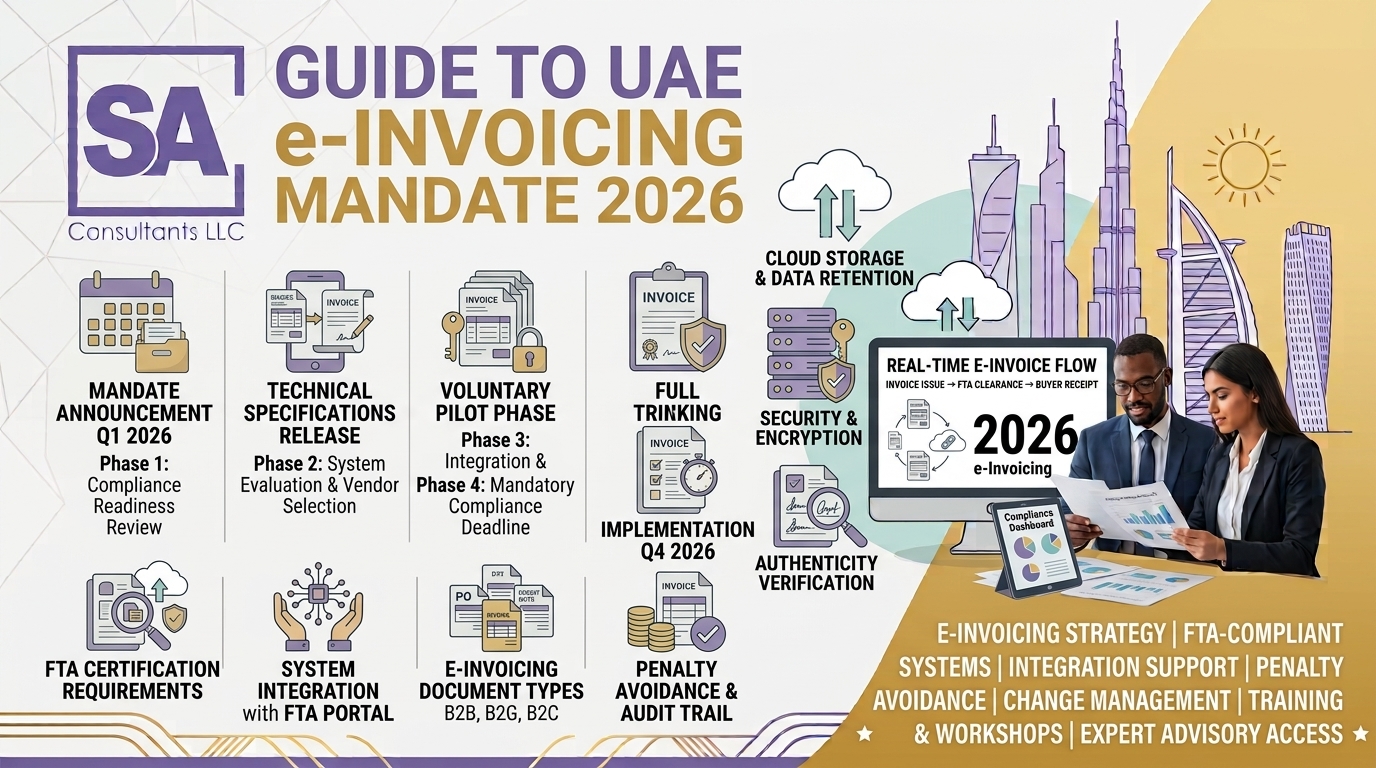
The UAE has introduced a phased approach to e-Invoicing.
For businesses subject to the system with annual revenue exceeding AED 50 million, the Ministry of Finance extended the deadline for appointing an Accredited Service Provider to 30 October 2026. The mandatory implementation date for these businesses remains 1 January 2027.
For businesses below the AED 50 million revenue threshold that are subject to the system, the implementation timeline is later, giving them additional time to prepare.
The important point is that businesses should use this preparation period to review their accounting systems, invoice processes and data quality.
Why E-Invoicing Matters to Accounting and Bookkeeping
Traditional bookkeeping often involves collecting invoices and receipts and entering the information into accounting software.
E-Invoicing changes the flow of information.
Instead of relying heavily on manual entry, businesses can move toward a more connected process:
Transaction → E-Invoice → Accounting System → Reporting → Tax Records
This can reduce manual data entry and improve the consistency of financial records.
However, automation does not eliminate the need for accounting review.
Incorrect customer information, wrong VAT treatment, duplicate transactions or incorrectly configured accounting software can still create problems.
What Should UAE Businesses Do Now?
1. Review Your Current Accounting Software
Start by asking whether your current accounting system can support the UAE e-Invoicing requirements.
Check with your software provider and accounting team rather than assuming that existing invoicing functionality automatically means e-Invoicing compliance.
2. Review Your Invoice Data
Clean invoice data will become increasingly important.
Review:
- Customer names
- Customer tax information
- Supplier information
- VAT details
- Invoice numbering
- Business addresses
- Product and service descriptions
- Payment information
Poor-quality data can create problems when businesses move to more automated processes.
3. Review Your Bookkeeping Workflow
Look at what happens from the moment a sale is made until the transaction appears in your accounts.
Ask:
Who creates the invoice?
Where is it stored?
How is it entered into the accounting system?
Who checks the VAT treatment?
How is payment recorded?
How is the transaction included in financial reporting?
This exercise can reveal manual steps that need to be changed.
E-Invoicing and VAT Records
The UAE e-Invoicing programme is closely connected with tax administration and VAT information.
The FTA describes e-Invoicing as part of a digital ecosystem designed to support secure electronic exchange of invoice data and tax reporting.
This means businesses should make sure their accounting and VAT processes are aligned.
For example, an invoice generated correctly but posted incorrectly in the accounting system can still create reporting issues.
Good bookkeeping remains important even when invoice processing becomes more automated.
E-Invoicing and Accounts Receivable
Accounts receivable teams should also prepare for the change.
Businesses should review how they:
- Create customer invoices
- Send invoices
- Track invoice status
- Record payments
- Handle credit notes
- Follow up overdue balances
- Reconcile customer accounts
A better-connected invoicing system can provide cleaner information about outstanding customer balances.
However, businesses still need a process for reviewing overdue invoices and resolving customer disputes.
E-Invoicing and Accounts Payable
The same principle applies to supplier invoices.
Businesses should understand how incoming electronic invoice information will enter their accounting workflow.
A good process should help finance teams:
- Match invoices with purchases
- Check supplier information
- Review VAT treatment
- Identify duplicate invoices
- Approve payments
- Record transactions correctly
- Reconcile supplier balances
This is where accounting and bookkeeping teams will continue to play an important role.
Should Small Businesses Start Preparing Now?
Yes, businesses that will eventually fall within the UAE e-Invoicing system can use the preparation period to improve their processes.
Preparation does not necessarily mean buying the most expensive accounting system.
It means understanding:
- What your business sells
- How invoices are created
- What accounting software you use
- How VAT is recorded
- How customer and supplier data is maintained
- How transactions reach your books
- Which manual processes can be improved
For smaller businesses, this can also be an opportunity to clean up bookkeeping before introducing additional automation.
Common E-Invoicing Mistakes to Avoid
Businesses should avoid waiting until the final deadline to discover that their systems need changes.
Common preparation problems can include:
Treating PDF Invoices as E-Invoices
A PDF invoice alone does not meet the FTA’s definition of structured electronic invoice data.
Ignoring Accounting Software Compatibility
Your invoicing system and accounting system need to work together.
Poor Customer Data
Incorrect customer information can create problems during automated invoice processing.
Manual Duplicate Entry
Entering the same transaction into several systems increases the risk of errors.
Delaying Bookkeeping Cleanup
Old unreconciled transactions can make system migration and testing more difficult.
Focusing Only on IT
E-Invoicing affects finance, accounting, sales, purchasing and management processes.
How Accounting Firms Can Help With UAE E-Invoicing
Businesses may need support beyond choosing software.
An accounting professional can help review:
- Existing bookkeeping processes
- Chart of accounts
- VAT treatment
- Invoice workflows
- Customer and supplier records
- Reconciliation procedures
- Financial reporting
- Accounting software configuration
The objective should be to create a process where e-Invoicing information flows correctly into the company’s accounting records.
How SA Consultants UAE Can Help
SA Consultants UAE can help businesses review their accounting and bookkeeping processes as they prepare for the UAE’s changing digital tax environment.
E-Invoicing should not be treated as an isolated invoicing project.
It should fit into the wider financial workflow covering sales, purchases, bookkeeping, VAT, reconciliation and reporting.
Businesses that review these processes early have more time to identify data problems, software limitations and manual accounting tasks before implementation becomes urgent.
UAE E-Invoicing Preparation Checklist
Before implementation, businesses should review:
- Current accounting software
- Invoice generation process
- Customer master data
- Supplier master data
- VAT configuration
- Invoice numbering
- Credit note process
- Accounts receivable workflow
- Accounts payable workflow
- Bank reconciliation
- Accounting integrations
- Data backup procedures
- E-Invoicing service provider requirements
- Internal finance responsibilities
Frequently Asked Questions
What is e-Invoicing in the UAE?
UAE e-Invoicing is the electronic exchange of structured invoice data between businesses with electronic reporting to the Federal Tax Authority.
Is a PDF invoice considered an e-Invoice?
No. The FTA specifically states that PDFs, Word documents, images, scanned copies and emails are not considered e-Invoices.
When does UAE e-Invoicing become mandatory?
The UAE is implementing e-Invoicing in phases. For businesses with annual revenue above AED 50 million that are subject to the system, mandatory implementation is scheduled for 1 January 2027.
What is the Accredited Service Provider deadline?
For businesses with annual revenue exceeding AED 50 million that are subject to the system, the Ministry of Finance extended the Accredited Service Provider appointment deadline to 30 October 2026.
Does e-Invoicing replace bookkeeping?
No. E-Invoicing changes how invoice information is exchanged and reported, but businesses still need proper bookkeeping, reconciliation, accounting review and financial reporting.
Should businesses change their accounting software?
Businesses should review whether their existing accounting and invoicing systems can support the applicable UAE e-Invoicing requirements. The appropriate solution depends on the business and its existing technology setup.
Final Takeaway
UAE e-Invoicing is becoming an important part of the country’s digital tax and business environment.
For businesses, preparation should start with the basics: clean financial data, reliable bookkeeping, suitable accounting software and a clearly documented invoicing process.
The businesses that prepare early can use the transition period to identify problems before they become deadline problems.
For UAE companies, e-Invoicing is not simply about replacing paper or PDF invoices.
It is about creating a more connected financial process from the original transaction through invoicing, bookkeeping, VAT records and financial reporting.