A major UAE VAT compliance change is about to take effect.
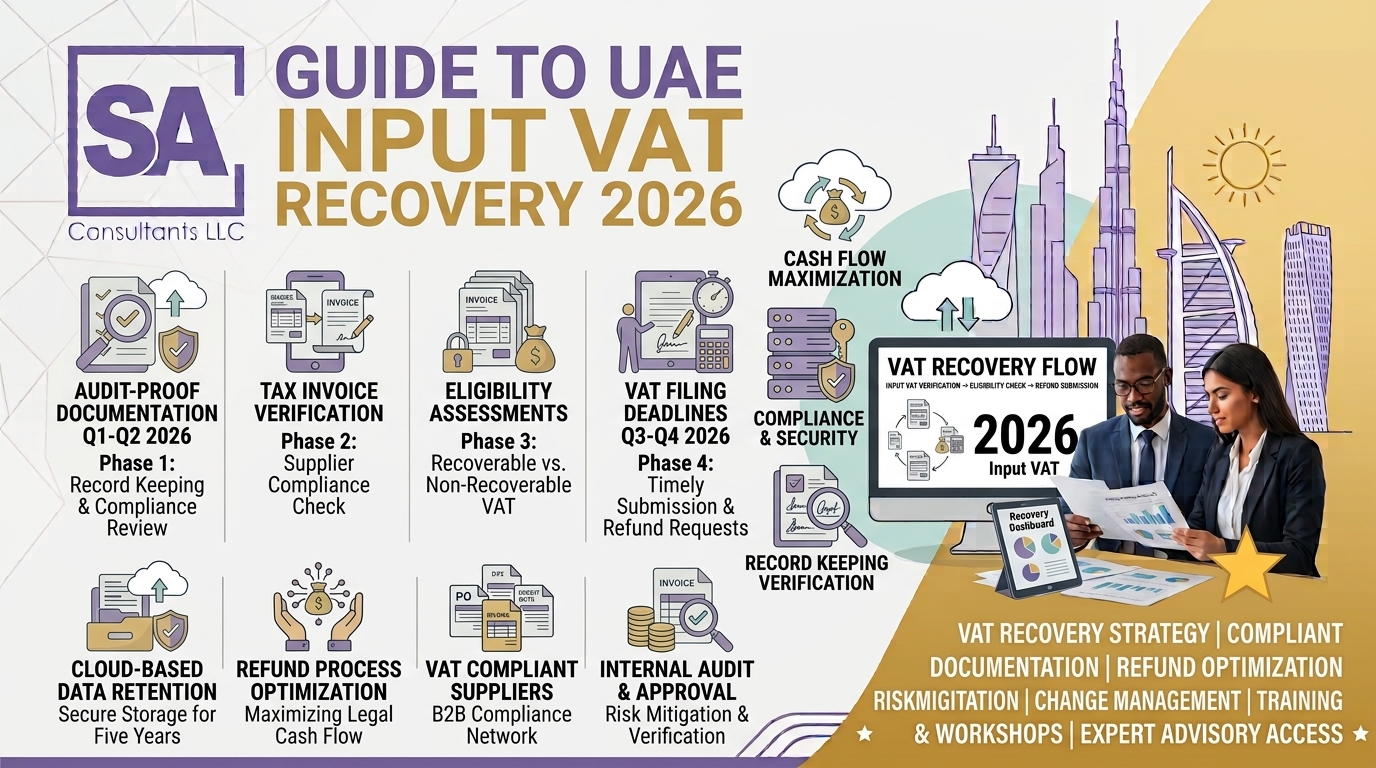
From 1 October 2026, businesses will need to pay closer attention to how they verify suppliers and supplies when claiming input VAT.
The Federal Tax Authority has issued FTA Decision No. 13 of 2026, which sets out measures, procedures and conditions for taxable persons to verify the validity and integrity of supplies before deducting input tax.
The change is important for finance teams, accountants and business owners because input VAT recovery will increasingly depend on having proper checks and supporting records.
For UAE businesses, this means VAT compliance is becoming more closely connected with accounting, bookkeeping, supplier management and documentation.
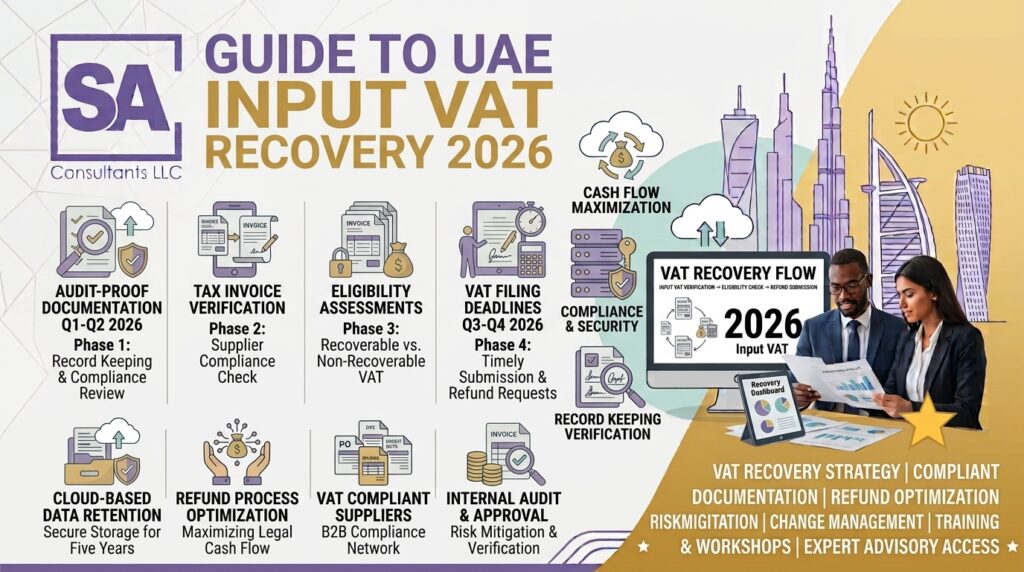
What Is Changing With UAE Input VAT Recovery?
Input VAT is the VAT a business pays on eligible purchases and expenses that may be recoverable under UAE VAT rules.
Under the new verification requirements, taxable persons need to take specific steps to verify the supplier and the supply before deducting input tax.
The FTA decision sets out procedures covering supplier identity, business activity, payment methods and the authenticity and commercial nature of supplies.
This is why businesses should not look at VAT recovery as simply an accounting entry.
The underlying transaction needs to be properly documented.
What Is “Know Your Supplier” in the UAE?
The term Know Your Supplier, or KYS, is increasingly being used to describe the supplier verification process businesses need to consider when recovering input VAT.
The basic idea is straightforward:
Before claiming input VAT, a business should have reasonable processes to establish that it is dealing with a genuine supplier and receiving a genuine commercial supply.
Recent UAE business coverage has highlighted the growing importance of these checks ahead of the October 2026 effective date.
What Should Businesses Verify?
The FTA’s Decision No. 13 of 2026 includes requirements concerning the identity and status of suppliers.
Depending on the circumstances, businesses may need to verify information such as:
- Supplier identity
- Supplier’s legal status
- Authorised representatives
- Actual business location
- Nature of the supplier’s activities
- Commercial reason for the transaction
- Payment arrangements
- Authenticity and ownership of goods
- Supplier’s ability to provide the goods or services
Businesses should establish a documented process rather than handling each transaction differently.
When Should a UAE Business Verify a Supplier?
The decision provides for supplier verification when a taxable person first deals with a supplier or where the supplier has not been verified within the previous 12 months.
Businesses also need to verify each taxable supply.
This means supplier verification should become part of the normal finance workflow rather than a one-time compliance exercise.
What About High-Value Suppliers?
The verification requirements become more detailed for higher-value relationships.
Where supplies from a supplier exceed, or are expected to exceed, AED 375,000 over a 12-month period, the decision includes additional checks such as verifying the supplier’s bank account and reviewing relevant public recommendations or reliable reviews and media coverage.
For finance teams, this means larger supplier relationships may require stronger documentation.
What Are the Risk Indicators?
The FTA decision identifies circumstances that can indicate additional risk.
Examples include a supplier changing its address more than twice within the previous 12 months, significant changes in key employees, or transactions that are disproportionate or unexpected.
Where such indicators exist, the taxable person should retain a clear and justified explanation for the transaction and the checks performed.
This does not mean that every unusual transaction is automatically invalid.
It means the business should be able to demonstrate why the transaction is commercially reasonable and what checks were performed.
What About Payments in Cash?
Payment methods are also relevant.
The FTA decision expects businesses to consider whether the payment method is commercially justifiable.
Electronic payment is expected in the relevant circumstances, while cash payments should have a documented commercial reason.
This makes payment documentation an increasingly important part of the accounting records supporting VAT recovery.
What Should Businesses Do Before October 1?
With the effective date approaching, UAE businesses should review their existing VAT and bookkeeping processes.
1. Create a Supplier Verification Policy
Document:
- Who performs supplier checks
- What information must be collected
- When verification is required
- Who approves exceptions
- Where supporting documents are stored
2. Review Existing Suppliers
Start with major suppliers and suppliers generating significant input VAT.
Check whether supplier information is current and whether the business has appropriate supporting documentation.
3. Review Your Accounting Workflow
Your accounting team should know what happens when a supplier invoice arrives.
The process should cover:
Supplier → Invoice → Verification → Accounting Entry → VAT Review → Payment → Record Keeping
4. Keep Evidence
A verification policy is only useful if the business keeps evidence that the process was actually followed.
Keep relevant:
- Supplier documents
- Contracts
- Tax invoices
- Payment records
- Bank information
- Verification notes
- Commercial explanations
- Supporting correspondence
How Will This Affect Bookkeeping?
The new requirements make accurate bookkeeping even more important.
A bookkeeping system should not only record the amount of an invoice.
It should allow the business to connect the transaction with its supporting documentation.
For example, if a business purchases services worth AED 50,000 plus VAT, the accounting records should allow the finance team to identify:
- Who supplied the service
- What service was provided
- Why it was purchased
- How it was paid
- What VAT was charged
- Which accounting entry was created
- What supporting documents exist
This creates a much stronger audit trail.
What Should Dubai Businesses Do Now?
Businesses using VAT bookkeeping services in Dubai should ask their accounting provider whether supplier verification is already included in their VAT compliance workflow.
A useful monthly process can include:
Supplier Review
Check supplier details and identify significant changes.
Invoice Review
Confirm that tax invoices and supporting documents are available.
VAT Review
Check whether the input VAT claim is properly supported.
Payment Review
Confirm that payment information is consistent with the transaction.
Record Keeping
Store verification evidence alongside the relevant accounting records.
Does This Mean Every Supplier Is High Risk?
No.
The purpose of the requirements is not to treat every supplier or transaction as suspicious.
The business should apply the relevant verification procedures and pay additional attention where risk indicators or other circumstances require it.
The important point is documented, reasonable and consistent verification.
Why This Matters for UAE Businesses
VAT compliance is moving beyond simply calculating output VAT and input VAT.
Businesses increasingly need to demonstrate that their transactions are genuine, properly documented and supported by reliable accounting records.
The FTA’s legislation page currently lists Decision No. 13 of 2026 alongside other recent VAT and accounting developments, including the September 2026 Executive Regulation amendments and Decision No. 4 of 2026 on accounting records and commercial books.
This shows how closely accounting records and tax compliance are becoming connected.
UAE VAT Supplier Verification Checklist
Before 1 October 2026, businesses should ask:
- Have we identified our major suppliers?
- Is supplier information up to date?
- Do we know who represents the supplier?
- Have we reviewed the supplier’s business activity?
- Are significant transactions commercially justified?
- Are payment methods properly documented?
- Are tax invoices available?
- Are unusual transactions reviewed?
- Are verification records stored securely?
- Does our bookkeeping process support these checks?
How SA Consultants UAE Can Help
SA Consultants UAE can support businesses with accounting, bookkeeping and UAE tax compliance processes.
As VAT requirements become more detailed, businesses need financial records that do more than show numbers.
They need an organised audit trail connecting suppliers, invoices, payments, accounting entries and VAT claims.
A properly structured accounting and bookkeeping process can make it easier to perform these checks consistently and maintain the documentation required for compliance.
Frequently Asked Questions
What is changing for UAE input VAT recovery in October 2026?
FTA Decision No. 13 of 2026 introduces measures and procedures that taxable persons must follow to verify the validity and integrity of supplies before deducting input tax. The decision takes effect on 1 October 2026.
What is Know Your Supplier in the UAE?
Know Your Supplier refers to the process of verifying relevant supplier information and the commercial nature and validity of supplies before claiming input VAT, where the applicable requirements call for those checks.
Does every supplier require the same level of verification?
Not necessarily. The FTA decision provides different verification considerations depending on factors including the value and circumstances of the supplier relationship and transaction.
What is the AED 375,000 supplier threshold?
Where supplies from a supplier exceed or are expected to exceed AED 375,000 over 12 months, additional verification requirements apply, including supplier bank-account verification and specified external information checks.
Why is bookkeeping important for VAT compliance?
Bookkeeping creates the accounting trail connecting invoices, payments, suppliers and VAT entries. Good records make it easier to demonstrate how a VAT claim was supported.
When does FTA Decision No. 13 of 2026 take effect?
The decision takes effect on 1 October 2026.
Final Takeaway
The UAE’s VAT environment is becoming more focused on the quality of the transaction behind the tax claim.
From 1 October 2026, businesses should be ready for the supplier and supply verification requirements introduced by FTA Decision No. 13 of 2026.
The practical response is simple:
Verify suppliers. Review transactions. Keep evidence. Maintain accurate books.
For UAE businesses, strong bookkeeping is becoming an increasingly important part of effective VAT compliance.