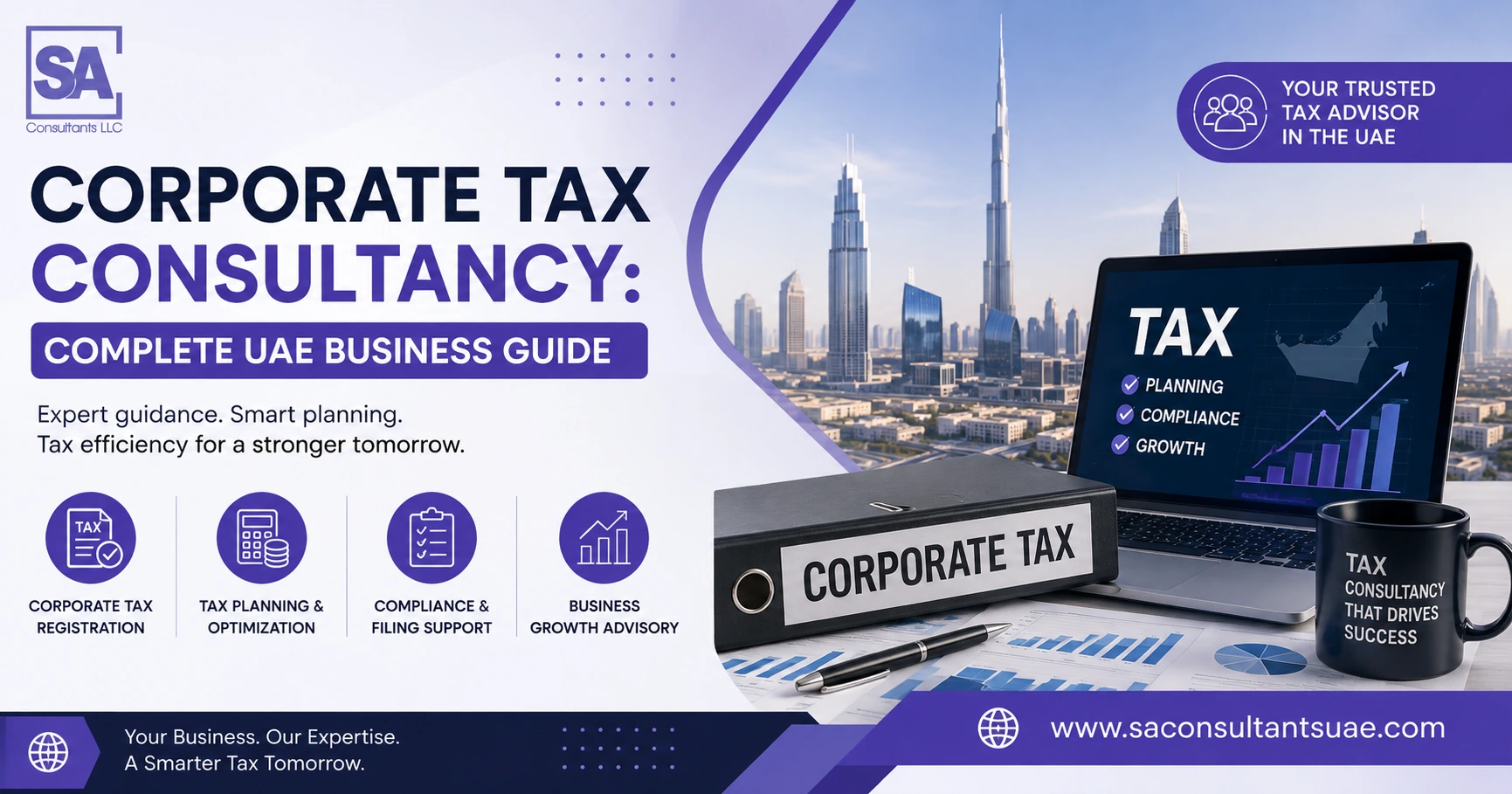
If you run a company in the UAE, you’ve probably noticed that tax season doesn’t feel like a once-a-year event anymore. Since federal corporate tax consultancy came into effect, it’s become something businesses have to think about continuously — registration deadlines, quarterly bookkeeping, free zone eligibility checks, and filing windows that don’t leave much room for guesswork. This guide walks through what this kind of advisory support actually means for a UAE business, when you need it, and how to pick a provider that won’t leave you scrambling at deadline time.
What Corporate Tax Consultancy Actually Covers
At its core, Corporate Tax Consultancy is professional guidance on how your business meets its corporate tax obligations under UAE law. That sounds simple, but in practice it touches almost every part of a company’s finances. A consultant will look at your revenue streams, your entity structure, whether you operate on the mainland or in a free zone, and whether any of your transactions involve related parties.
The reason this matters so much right now is that the rules are still relatively new. The Federal Tax Authority has issued a steady stream of clarifications since the tax was introduced, and businesses that registered in year one often find themselves needing to revisit assumptions they made early on. A good advisor keeps track of these changes so you don’t have to.
This is also where the difference between general accounting and specialized tax advice becomes obvious. An accountant can tell you what you earned and spent. Working with corporate tax consultants in Dubai goes further — it tells you what that means for your tax position, whether you qualify for any exemptions, and what documentation you’ll need if the FTA ever asks questions.
Why UAE Businesses Can’t Really Skip This Anymore
A few years ago, plenty of small and mid-sized companies in the UAE managed their taxes with little more than a spreadsheet and a part-time bookkeeper. That approach doesn’t hold up well under the current system. Here’s why:
- Free zone status isn’t automatic.
Just because your license says “free zone” doesn’t mean you qualify for the 0% rate. Qualifying income has specific conditions attached, and getting this wrong can mean an unexpected tax bill.
- Related-party transactions need documentation.
If your business deals with affiliated companies, transfer pricing rules require you to show that pricing reflects market terms.
- Deadlines are unforgiving.
Missing a registration or filing deadline triggers penalties that can add up fast, especially for businesses juggling multiple entities.
- The rules keep evolving.
What was true about a deduction or threshold last year might not be true today.
None of this means every business needs a full-time in-house tax department. It does mean that outsourcing to people who track these changes for a living is usually cheaper, in the long run, than learning the hard way.

The Core Benefits of Working With a Tax Consultancy
Getting Registration and Filing Right the First Time
Errors at the registration stage tend to snowball. If your taxable income is calculated incorrectly from the start, every subsequent filing inherits that mistake. This is exactly the kind of gap that corporate tax consultants in Dubai are trained to catch — advisors check your numbers against the actual rules rather than assumptions, and they know which forms and supporting documents the FTA expects.
Planning Ahead Instead of Reacting
The businesses that get the most value out of a consultancy relationship aren’t the ones who show up in March panicking about a deadline. They’re the ones who talk to their advisor throughout the year — before signing a new contract, before restructuring ownership, before expanding into a new emirate. That kind of forward planning is where real savings happen, not just at filing time.
Local Knowledge That Actually Matters
There’s a real difference between generic tax advice and guidance from corporate tax consultants in Dubai who deal with FTA requirements on a daily basis. UAE tax law has enough local nuance — free zone qualification, emirate-specific considerations, industry-specific treatment — that experience with the actual system here counts for more than textbook knowledge.
Reduced Exposure to Penalties
This one’s straightforward: the cost of a missed deadline or an incorrect filing is almost always higher than the cost of paying someone to get it right. Businesses that corporate tax consultancy fees as an expense to minimize often end up spending more later in fines and corrective filings.
A Direct Line to Tax Consulting UAE Expertise When You Need It
Questions don’t always come up conveniently. A supplier proposes a new payment structure, or a shareholder wants to bring in an investor, and suddenly there’s a tax question nobody in the office can answer. Having access to Tax Consulting UAE professionals who already understand your business means you’re not starting from scratch every time something unusual comes up.
Cleaner Books, Fewer Surprises
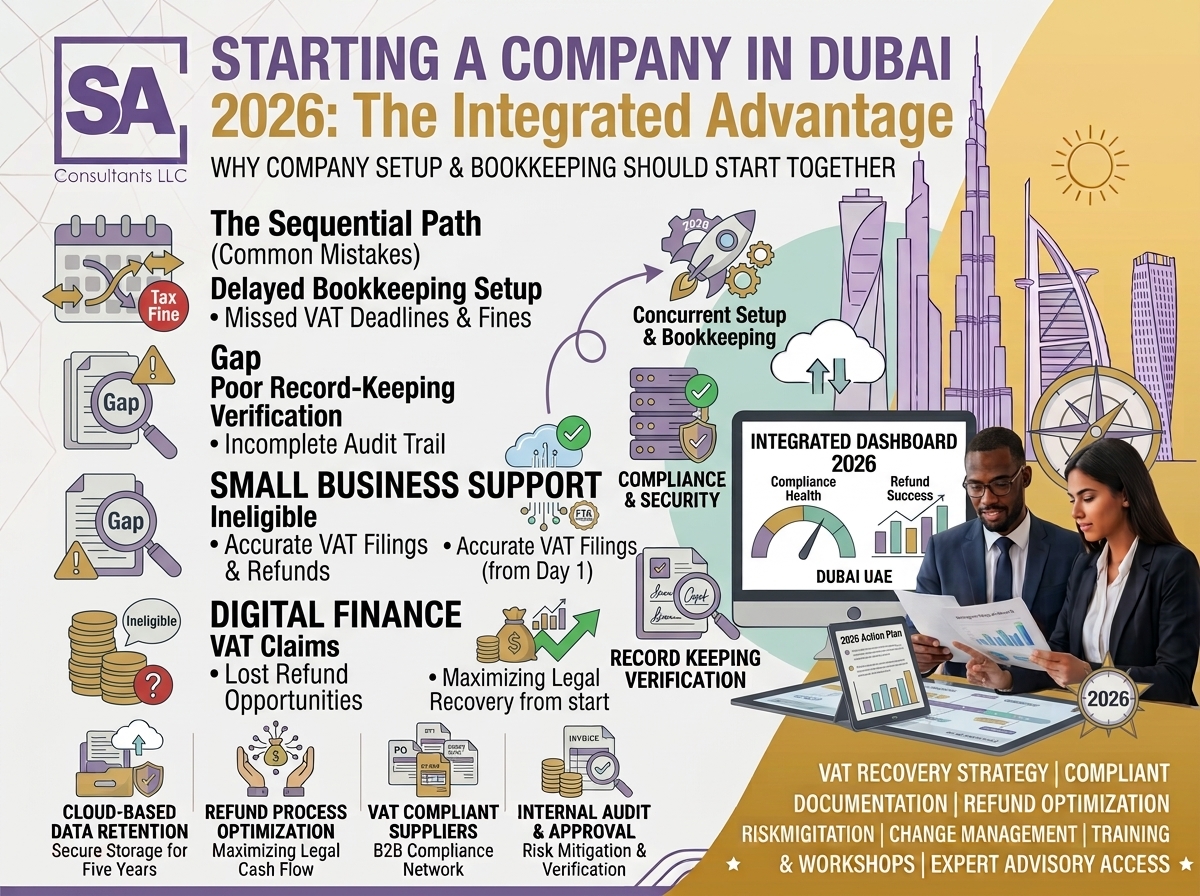
Tax calculations are only as good as the records behind them. This is where bookkeeping services tie directly into your tax outcomes. If your invoices, expense records, and revenue recognition are messy, your tax filing will be too — and fixing that mess under deadline pressure costs far more than maintaining clean books all year.

How Bookkeeping and Tax Advisory Work Together
It’s worth spending a moment on why these two things are so often bundled together. Corporate tax in the UAE is based on your actual financial results, adjusted according to specific rules. That means the quality of your day-to-day bookkeeping directly determines how accurate — and how defensible — your tax position is.
Businesses that treat bookkeeping services as a separate, lower-priority task often run into trouble when tax season arrives. Receipts are missing, categorizations are inconsistent, and reconciling a year’s worth of transactions becomes a rushed, expensive exercise. When bookkeeping and tax advisory are handled by the same team, or at least by teams that talk to each other regularly, filings tend to go much more smoothly.
There’s also a compliance angle here. VAT returns, audits, and economic substance filings all draw on the same underlying financial data as corporate tax consultancy. Consistent records make every one of these processes faster and reduce the chance that numbers in one filing contradict numbers in another.
Choosing a Corporate Tax Consultancy Provider
Not every provider offers the same depth of service, so it helps to know what to look for:
- Experience with UAE-specific rules.
Ask directly about their track record with free zone qualification, transfer pricing documentation, and FTA audits.
- Whether they handle bookkeeping too, or coordinate closely with whoever does.
A disconnect here is one of the most common sources of filing errors.
- How they communicate outside of deadline season.
Do they proactively flag regulatory changes, or do you only hear from them once a year?
- Clear, upfront pricing.
Vague fee structures usually mean surprises later.
If a provider can speak specifically to how they’ve handled situations similar to yours — your industry, your entity structure, your free zone status — that’s usually a better sign than generic marketing claims about being “trusted” or “leading.”
FAQs
Do small businesses really need dedicated tax advisory support, or is that just for larger companies?
Smaller companies often need it more, proportionally, because a single filing mistake can represent a much bigger hit relative to their revenue. Complexity doesn’t scale down with company size — free zone rules and documentation requirements apply regardless of headcount.
Can I just handle bookkeeping myself and only bring in a consultant at tax time?
You can, but it usually costs more in the end. Tax advisors working from disorganized records spend extra hours reconstructing your financial picture, and that time gets billed. Keeping records current throughout the year is almost always the cheaper path.
How often should I actually talk to my tax advisor?
More than once a year, ideally. Quarterly check-ins are common, and it’s worth reaching out any time you’re considering a major transaction, restructuring, or expansion — waiting until the annual filing means missing the chance to plan ahead.
Final Thoughts
Corporate tax in the UAE isn’t going away, and the rules aren’t getting simpler. Businesses that build a real relationship with a Corporate Tax Consultancy provider — one that includes solid bookkeeping services and ongoing access to Tax Consulting UAE expertise — tend to spend far less time worrying about compliance and far more time running their business. The upfront cost of good advice is almost always smaller than the cost of getting it wrong.