
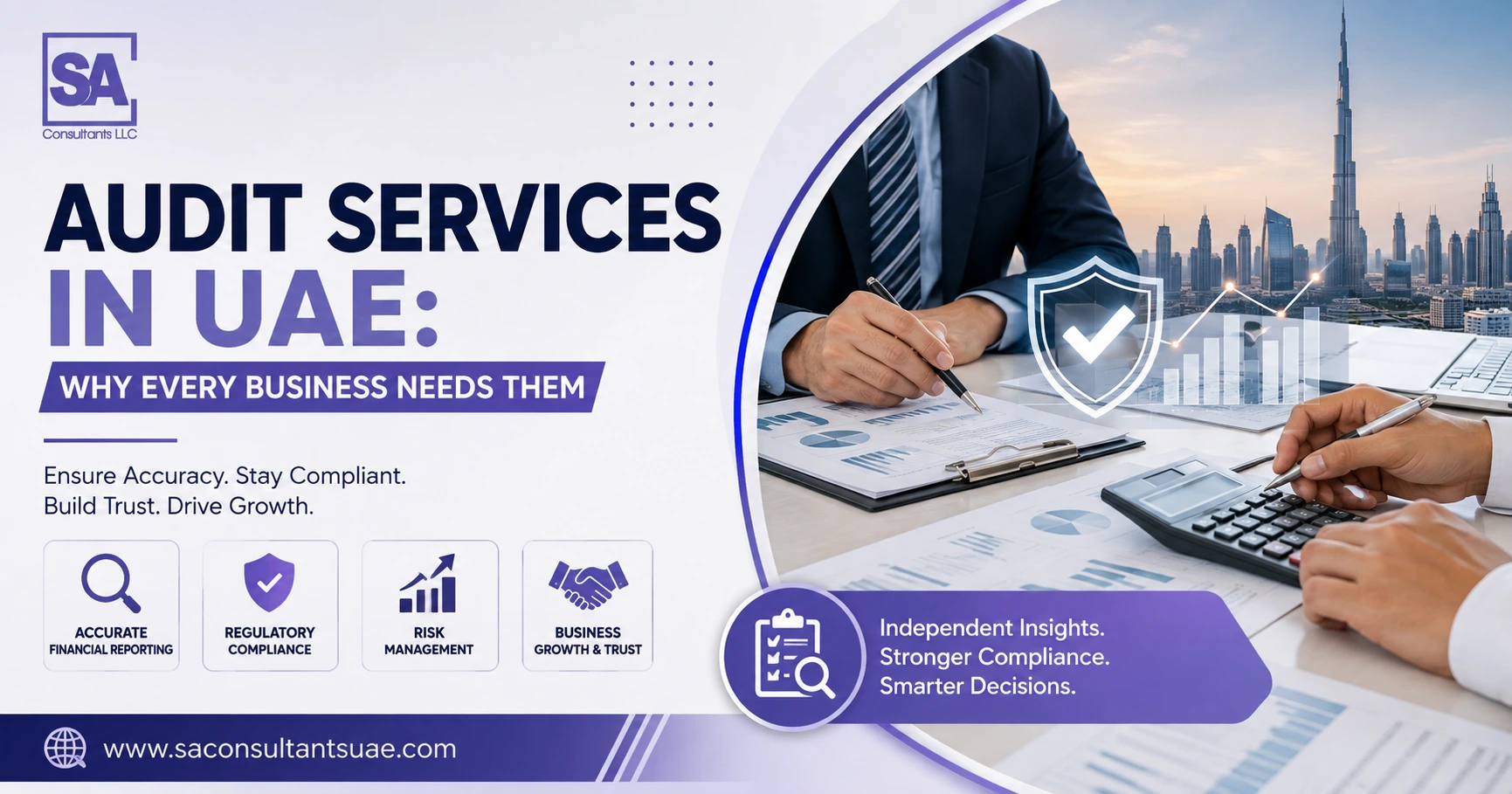
Running a business in the UAE today means operating in a market where financial transparency isn’t optional — it’s expected. Clean books, solid internal controls, and reporting you can actually stand behind are what keep a company credible, whether you’re courting investors or just trying to sleep at night. That’s the real value behind professional Audit Services in UAE.
People sometimes assume an audit is just someone double-checking your numbers. It’s more than that. It’s an independent look at your financial picture — one that flags risk early and gives owners something solid to base decisions on. Small business, scaling startup, or established corporation, a regular audit tends to pay for itself in the clarity it brings.
What Audit Services Actually Involve
At its core, an audit means having someone independent go through your financial records, transactions, accounting processes, and statements to check whether they’re accurate, complete, and built to the standards they’re supposed to follow.
Auditors dig into supporting documents, trace transactions, test how well your internal controls hold up, and flag anything that doesn’t add up. Once that work is done, you get findings and practical recommendations — not just a list of problems, but a starting point for fixing them.
For companies operating in the UAE specifically, this matters even more because the regulatory and commercial landscape here is fairly structured. Keeping your records straight and meeting the legal requirements that apply to you tends to save a lot of headaches down the road — and it builds a financial foundation that’s actually worth something.
Why Every Business Needs Audit Services in UAE
1. Keeps Your Numbers Honest
You can’t make good decisions on bad data. A misplaced entry, an unsupported transaction, a reporting error — these things compound, and before long you’re budgeting off numbers that don’t reflect reality.
Professional Audit Services in UAE catch these issues: the discrepancies, the weak spots in reporting, the transactions nobody can quite explain. Having someone independent look things over gives owners real confidence that the financial statements in front of them actually describe the business.
It also makes it far easier to judge revenue, expenses, assets, and profitability with any accuracy.

2. Keeps You on the Right Side of Compliance
Every business in the UAE has to operate within a framework of laws, standards, and reporting obligations — and depending on your legal structure, industry, and jurisdiction, audited financials might not be optional at all.
Working with experienced professionals makes these obligations far less confusing. A properly conducted statutory audit in UAE gives you an independent, defensible assessment of your financials wherever regulation — or your own company’s governing documents — calls for one.
Keep your records organized and your audits on schedule, and compliance stops being something you dread.
3. Strengthens Internal Controls
Internal controls are the guardrails that protect company assets and keep errors — or worse, fraud — from slipping through. As a company grows, weak controls stop being a minor annoyance and start becoming a real liability.
Auditors look closely at how you authorize spending, manage cash, track inventory, report financials, separate duties, and monitor transactions. What they find often points straight to where processes need tightening.
That’s what makes auditing useful well beyond financial reporting — it’s genuinely a governance tool.
4. Surfaces Financial Irregularities
Fraud rarely announces itself. Unauthorized payments, inflated figures, duplicate invoices, misused resources — these tend to hide in plain sight when controls are loose.
An audit isn’t designed purely to hunt for fraud, but an independent review will often surface the unusual transaction or the control gap that deserves a closer look. That objectivity is hard to replicate internally.
By reviewing activity with fresh eyes, auditors help management spot exactly where more oversight is needed.
5. Earns Trust With Investors and Stakeholders
Investors, lenders, shareholders, and partners all want the same basic reassurance: that the numbers they’re looking at are real. An independent audit report is one of the clearest ways to provide that.
If you’re raising capital or seeking financing, well-maintained, independently reviewed financials say more about your seriousness than any pitch deck can. That’s especially true for companies gearing up for expansion, restructuring, or an acquisition.
Picking the Right Audit Firms in Dubai
Choosing who audits your business isn’t a decision to rush. Look at the firm’s expertise, industry background, reputation, and — importantly — how well they understand UAE regulation.
The established audit firms in Dubai tend to tailor their approach depending on the industry and structure they’re working with. Before signing on with anyone, it’s worth checking whether they actually understand your specific accounting needs and can explain their findings in plain language, not jargon.
A good firm doesn’t stop at pointing out problems. It hands you something you can act on — practical steps for tightening processes, controls, and reporting. And before the engagement starts, get clear on scope, timelines, documentation requirements, and how communication will work throughout.

Why Statutory Audits Matter
If your business is legally required to be audited, getting the process right — and on time — isn’t negotiable. A statutory audit in UAE is an independent review of your financial statements carried out to the applicable legal and professional standards.
The process usually runs through planning, a review of the accounting records, testing of selected transactions, an assessment of internal controls, financial statement analysis, and finally an audit report.
The more prepared you are going in, the smoother it goes. Solid bookkeeping, organized invoices, bank statements, contracts, and payroll records all speed things along considerably.
Audit Compliance Dubai and Good Governance
Strong audit compliance Dubai practices do more than tick a legal box — they push companies toward more consistent financial habits and stronger accountability across the board.
Businesses that treat compliance seriously tend to spot financial risk before it turns into a real problem. Regular reviews keep management close to the numbers, sharpen controls, and make it easier to adapt as regulations shift.
For companies with multiple branches, several shareholders, or genuinely complex transactions, this kind of discipline becomes even more essential.
How Auditing Feeds Business Growth
It’s easy to think of auditing as purely a reporting exercise, but its impact reaches further than the balance sheet. Reliable financials tell you which products, services, or departments are actually driving returns — and which aren’t pulling their weight.
Audit findings frequently uncover wasted spending, inefficient processes, or controls that just aren’t working. That kind of insight feeds directly into better planning.
In that sense, Audit Services in UAE double as a strategic tool — giving owners the accurate information they need to build realistic budgets, weigh expansion opportunities, manage cash flow, and set goals that actually hold up. For companies eyeing new markets or bigger investments, that clarity is worth a lot.

Getting Ready for an Audit
The easiest way to make an audit painless is to keep your records in order all year, not scramble to organize them right before the deadline.
Reconcile your accounts regularly, hold onto supporting documents as you go, and keep contracts and invoices properly filed. Communicate openly with your auditors and get them what they ask for promptly. If previous audits flagged issues, dealing with those before the next round goes a long way toward a cleaner process next time.
Final Thoughts
Professional Audit Services in UAE aren’t just a compliance checkbox — they’re a genuine part of running a financially healthy business. They confirm your numbers are accurate, tighten your controls, surface risk early, support compliance, and give stakeholders real reason to trust what you’re telling them.
For companies across Dubai and the wider UAE, finding the right audit partner makes the whole process far more useful, not just more bearable. A well-run audit shouldn’t be treated as a formality — it can genuinely function as a strategic tool that hands management better information for better decisions.
Keep your records accurate, address weak spots as they come up, and stay on top of compliance, and you’re building something businesses need most: a foundation that can actually support long-term growth. Whether your company is brand new or well established, investing in proper auditing pays off in transparency, efficiency, and staying power.
FAQS
1. Why are Audit Services in UAE important for businesses?
They verify that your financial statements are accurate, catch discrepancies, assess how well your internal controls are working, and improve overall transparency — while also helping you stay aligned with applicable regulatory and reporting requirements.
2. Is a statutory audit mandatory for every company in the UAE?
Not automatically. It depends on your legal structure, jurisdiction, licensing authority, and the regulations that apply to you. It’s worth getting professional advice to know exactly where you stand.
3. How does an audit actually support growth?
It gives you financial information you can trust for budgeting, forecasting, cost control, and investment decisions — and it often surfaces inefficiencies that are quietly eating into profitability.
4. How do I pick the right audit firm in Dubai?
Look at their qualifications, relevant industry experience, familiarity with UAE regulation, reputation, and how clearly they communicate. It also helps to nail down the proposed scope, timeline, and reporting process upfront.
5. What documents does an audit typically require?
Usually financial statements, general ledgers, bank statements, invoices, receipts, contracts, payroll records, fixed-asset schedules, inventory records, and documentation for any significant transactions — though the exact list depends on your business and the scope of the audit.